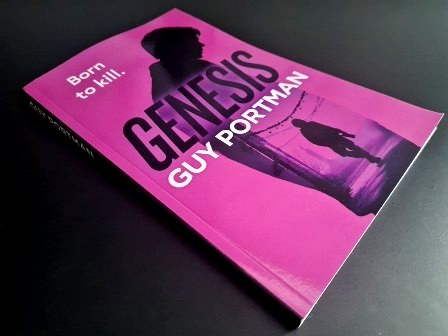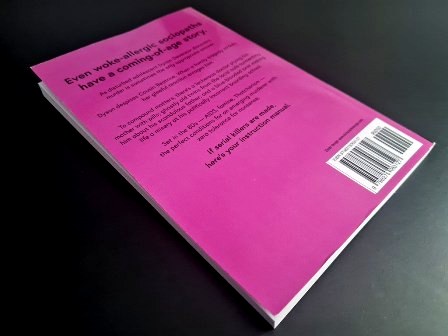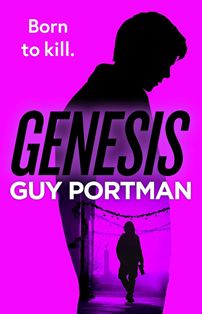
First published back in December of 2025, British author Guy Portman’s novel ‘Genesis’ formed the first book in the ‘Necropolis’ series, featuring the psychopath ‘Dyson Devereux’. Although ‘Necropolis’ (2014) was the first book within this series to be written and published, ‘Genesis’ – and indeed the next book in the series ‘Avengement’ (2025) – formed prequels to the original trilogy.
There was also a three-book spinoff series called the ‘Emergence’ series which featured the young psychopath ‘Horatio’ who was Dyson Devereux son.
DLS Synopsis:
It’s 1985 and Dyson Devereux is eleven years old. However, Dyson’s life isn’t an easy one. As Dyson is beginning to explore life he finds he’s faced with some life changing difficulties.
Up until he was six years old, Dyson’s father had lived with him and his mother. Then the couple had split, leaving Dyson with only relatively infrequent contact with his father.
Recently, his father had gone into hospital with a virus. An illness which transformed him into a barely recognisable skeleton of a man. Sapped of energy and his good looks. And it wasn’t long before his body finally succumbed to the virus. Dyson’s father died in hospital within days of his son visiting him.
Unfortunately, tragedy for the young boy wouldn’t end there. Despite their previous separation, Dyson’s mother also took the loss of her ex-partner badly. She soon became dependent upon prescription drugs. Drugs which were provided by a doctor who was taking advantage of the situation. Dyson watched from the sidelines as his mother’s life gradually fell apart. Until finally, she too succumbed to a premature death.
After her death, Dyson was carted off to live with his Aunt and his Cousin Beatrice. For Dyson, life couldn’t get much worse! Out of all the people in the world, he despises Beatrice the most. The chubby-faced, pig-tailed girl is as nasty and vindictive as she is loathsome.
Meanwhile, in school Dyson is now being subjected to an increased amount of bullying. Rumours are rife that his father died from AIDs and that his mother was nothing but a dead junkie. Home life at his Aunt’s isn’t any better. Beatrice makes his life a constant hell.
Thankfully, at the age of twelve, Dyson is packed off to a prestigious boarding school, where his academic abilities are finally able to flourish. Or so they should have, if it wasn’t for the problems which seem to follow Dyson Devereux. Problems that always, inevitably, end in some form of tragedy.
This is the story of Dyson Devereux’s early years. This is his genesis…
As mentioned at the start of this review, although this is the fourth book to be written within the ‘Necropolis’ series, it’s a prequel to the original books, and as such, chronologically in the series, this book actually comes first and sets down the early life of our principal protagonist, the anti-hero Dyson Devereux.
As you can no doubt imagine, this instalment is fundamentally a coming-of-age story. One which takes us through the early years of Dyson Devereux. If you’ve not yet read the first books (those published prior to this one), which started with ‘Necropolis’ (2014), then essentially what we have is a dark comedy, rich with desert dry wit, involving the incredibly charismatic psychopath – Dyson Devereux. Think ‘American Psycho’ (1991) meets Jeff Lindsay’s ‘Darkly Dreaming Dexter’ (2004) only with a far more comical delivery to it.
In this instalment we have Dyson Devereux’s early years as a young lad who’s about to enter his teens. It’s a crucial period in the young boy’s life, when double tragedy hits with both his parents dying prematurely, flinging his life into turmoil. His Aunt begrudgingly takes him into her home; an environment instantly met with tension between Dyson and his cousin.
However, Dyson isn’t a normal young boy. His emotional responses aren’t the same as those displayed by your average teen. He lacks empathy and compassion. He’s a sociopath. Soon to evolve into a psychopath.
Again, if you’ve read any of the other books within the series, or its spinoff series, then you can no doubt image what this all looks like. This new prequel is every bit as good as the other instalments. It has the same levels of dark and dry humour. It contains the same level of social and societal references. Pop culture blended with a character driven plot, rich with sharp quips and a blossoming, sophisticated loveable rogue.
What’s more, in this instalment in particular, author Guy Portman has injected a whole host of nostalgic references from the 80s. It’s set between 1985 and 1989, from when Dyson was eleven until he’s fourteen. Because of this, the story contains a litany of references from that time. Refences which will likely bring a big smile to the face of those of a similar age at that time. Garbage Pail Kids, Jim’ll Fix It, Marathon Bars, NES consoles, frigging Häagen-Dazs ice cream! There’re references to the famine in Ethiopia (and all those dark jokes which went around the playgrounds at the time), as well as the topical explosion that occurred across the news with the arrival of AIDS and the fear that arose from this.
Portman captures all of this so perfectly. The essence of growing up in the 80s. The topical backdrop, the cultural references, and the feel of being Generation X.
The tale itself is the absolute epitome of a coming-of-age story. It’s also reads like an instalment within a series, rather than a standalone offering. As such, Portman has made a particular point of tying in many of the intricate aspects from the previously released books. His father’s fly-fishing tin which Dyson’s mother gave him on his seventh birthday. The Latin lessons and the boy’s love of cricket. It’s all there – the early roots, the blossoming informative years of the psychopathic serial killer which we’ll grow to adore!
There’s also a rich cast of characters, many of which become thorns in Dyson’s side. Doctor Trenton (or ‘Treacherous Trenton’ as Dyson renames him, GPK-style) is the G.P. who plays a key role in Dyson’s simmering anger. He’s instantly dislikeable with his monocle and silver Porsche, let alone his obviously devious, deceitful and abusive nature.
Then there’s the elderly proprietors of ‘The Tollington Twins Teahouse’ – the identical twins who take an instant dislike to Dyson (which they make abundantly clear) because of the rumours surrounding his deceased father. Of course, they too receive their own Garbage Pail Kids names – Virulent Veronica and Conniving Clementine. Brilliant!
The main antagonist in this story is Beatrice – his cousin. She’s a vicious, nasty-as-holy-hell teenager, who’s constantly mocking Dyson in the cruellest of ways. Trust me, she’s a bitch, bitch, bitch if ever there was one.
Of course, there’s a lot of similar coming-of-age themes which we saw in the spinoff ‘Emergence’ series. Where Horatio lost his virginity within those books, so we also see Dyson reaching that critical moment in his life in this book. Although, here perhaps think more ‘American Pie’ (1999)… It’ll leave it at that!
Honestly, this new instalment is every bit as entertaining as it sounds. But more than that, it actually manages to pull at your heartstrings. It engages you, brings you into the comical turmoil and the adolescent troubles. It takes you back in time to your own upbringing. It’s portrayal of bulling and Dyson ordeal with it goes through you like a knife in your heart. You feel his anger. His frustration. And his bubbling, seething, longing for revenge.
After reading ‘Genesis’, there’s no hanging around before I move onto the next instalment in the series, with ‘Avengement’ (2025). The books really are that frigging good. They’re irresistibly good reading. A bookworm’s crack.
The novel runs for a total of 153 pages.

© DLS Reviews
‘Necropolis’ instalments:
- ‘Genesis’ (2025)
- ‘Avengement’ (2025)
- ‘Necropolis’ (2014)
- ‘Sepultura’ (2018)
- ‘Golgotha’ (2019)
‘Emergence’ instalments:
- ‘Emergence’ (2023)
- ‘Arcadia’ (2024)
- ‘Cognizance’ (2024)