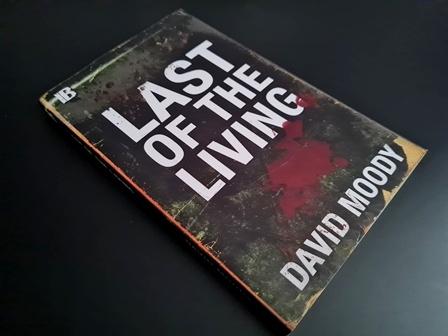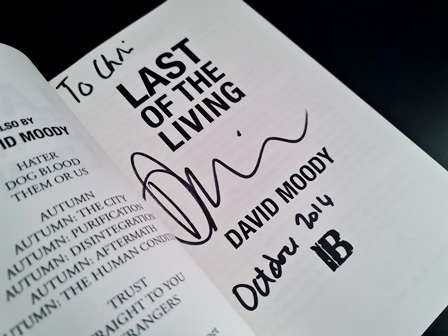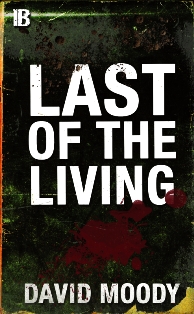
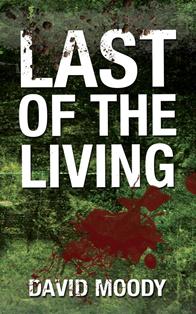
First published back in October of 2014, David Moody’s book ‘Last Of The Living’ brought together the two novellas and the various short stories that made up his two previous ebook-only releases – ‘The Cost Of Living’ (2014) and ‘Isolation’ (2014).
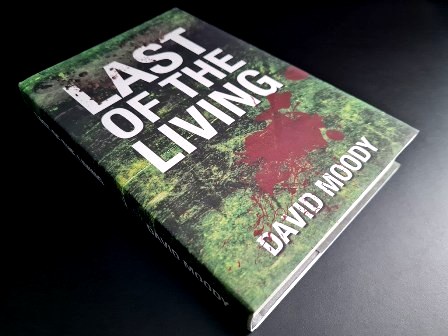
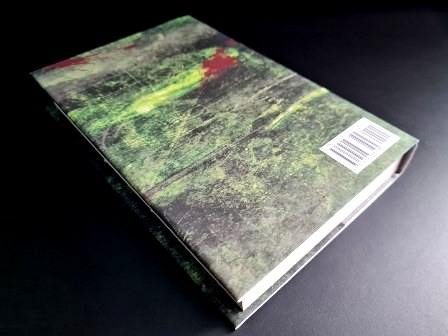
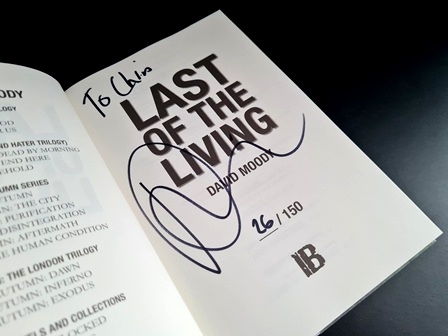
In November 2025 Moody published a special limited edition 10th Anniversary Edition of ‘Last Of The Living’. This special edition hardback was limited to just 150 hand-numbered copies and contained a huge amount of bonus material.
In November 2025 Moody published a special limited edition 10th Anniversary Edition of ‘Last Of The Living’. This special edition hardback was limited to just 150 hand-numbered copies and contained a huge amount of bonus material.
The Cost Of Living – 100 Pages
Their first glimpse of what was going on came whilst they were out shopping in the local supermarket. Stuart and Gabby saw the woman come into the store and subsequently collapse along the alcohol aisle. But it was what happened next that scared the hell out of them. The woman, who appeared to have lost consciousness, suddenly burst back into a vigorous life; grasping for those around her and desperately attempting to get her saliva over anyone she could. A poor young shop girl who had been trying to help the flailing woman, was pulled down and covered in the woman’s spit. It was then that Stuart realised it was just like the reports they’d seen on the tv.
Back at their home, Stuart was becoming increasingly concerned about what was going on around the globe. The mainstream media was making the infection out to be less of a big deal than he knew it was. In fact, the press seemed to be side-lining the whole thing. However the unofficial news, such as what was being said across the social media sites, were painting a very different picture.
And then on Wednesday everything changed. Stuart knew if he was going to look after his family then he needed to act now. He could see where all this was going, and he had to get in early in order to protect those he was responsible for. So he started to stockpile for the apocalypse. A visit to the warehouse where he used to work and then on to the local DIY store provided him with all the supplies he needed for him and his family to keep going for couple of months.
But Stuart knew it would take some doing to convince his wife that this was what needed to be done. That it was necessary. That it was essential.
And then suddenly what they had been hearing about in the news was on their very own doorstep. Suddenly, the infected were everywhere, and they were hunting out the living. They appeared dead but for the germ which drove them on. Their emaciated forms wanting but one thing – to spread the infection.
From the relative safety of their now boarded-up house, Stuart looked out over the masses of infected that roamed the streets outside. Within their house Stuart had a family that he would do anything to ensure the survival of. Along with Gabby, he had his fifteen-year-old son, Nathan, a three-year-old daughter, Sally, and their newborn baby Hannah. A family he would do anything to protect from what was outside. But as he will eventually learn, sometimes it’s not all about just being practical...
Okay, so you know what to expect when confronted with a zombie-apocalypse-style story that was written by David Moody. After all, since Moody first penned ‘Autumn’ (2002) he’s become somewhat of a master of the subgenre. Indeed, there’s a hell of a lot in this third re-working of Stuart and Gabby’s plight which is very close to a number of scenarios from within his ‘Autumn’ series – not to mention the likes of his rage-fuelled ‘Hater’ (2006) trilogy or indeed his earlier zombie-apocalypse-observing short ‘Muriel’ (2011).
Indeed, here we have another global epidemic closely akin to a zombie outbreak, although utilising what appears to be more of a ‘rage’ style of virus. Very much akin to the premise within Danny Boyle’s ‘28 Days Later’ (2002), the threat seems to be more of an infection rather than the actual reanimation of the dead. Although this particular point isn’t thoroughly detailed – and to be honest, it’s not altogether that necessary to.
As you’d expect from a David Moody story, the novella is primarily focused upon a handful of everyday characters and the huge emotional strain that they are confronted with. Indeed, the chapters of the tale jump between the perspectives of Stuart, Gabby and Nathan (although it’s mostly written from the perspective of Stuart), detailing how their tightly confined and horrendously restricted existence is affecting them.
Although much of the story is from within the four walls of their family home, there are a few scenes outside of the property that see definite elements of ‘Autumn: Disintegration’ (2011) or indeed Richard Matheson’s classic ‘I Am Legend’ (1954) creeping in. And when these reasonably fast-moving scenes come to fruition, they hit the reader like a sledgehammer to the face, in complete juxtaposition to the majority of the story’s trapped and confined setting.
There’s a real sense of utter desperation in the novella that comes out so much more than it had in the story’s two previous incarnations. Stuart has a single mindset that keeps him going. He has a focus that pushes him on. He just wants to make sure his family is safe and that they survive. And this attitude is undoubtedly the predominant focus of the entire story. But Moody slowly creeps in questions about this single-sighted attitude. He adds layers of doubt and ultimately makes the eventual outcome far more real through its conflicting complexities. And it works so painfully and heart-achingly well.
A truly superb post-apocalyptic story.
Priorities - 11 Pages
Almost a month had passed since the beginning of the end. Outside of their house along Ashbourne Close, more than a thousand corpses had gathered, with at least as many more dragging themselves towards the mouth of the cul-de-sac with each day. The dead had undoubtedly been attracted by the presence of the survivors. And they just kept on coming. Congregating. Waiting. Hoarding.
Inside their home, Stuart and Gabby Parker, together with their seventeen-year-old son, hide from the massing corpses. They knew that there was no one else left alive for miles around. They knew that they were some of the very last survivors. And they had little choice but to remain there. Trapped in their own home. Their stockpiled supplies going down by the day.
All they had left was each other. They were still a family, and they took whatever solace they could from that. But as the days wore on, their future gradually looking bleaker and bleaker, they knew that they had to face up to the inevitable. They had to make their final choices. They had to get their priorities right. After all, it’s not all about merely surviving…is it?
Here we have the original version of the story which Moody penned a number of years ago. Like with the two versions that followed, the characters, the premise, and the underlying principles to the story are roughly the same.
Even with its limited word count, Moody has nevertheless managed to capture the completely oppressive atmosphere of this horrendously bleak situation perfectly. Drenched in inescapable claustrophobia, it’s a story that traps the reader within its close confines within seconds. There’s very little of the outside world here. Everything is from within the four walls of their house. And my god does it work well within those simplistic constraints.
Having already read the novella-length version of ‘The Cost Of Living’, there are really no surprises in store for the reader here. But that still doesn’t detract from the overall impact of the tale. It still traps you in the close confines of the house. It still manages to portray the desperation and the characters’ complete loss of hope. It still feels all too real. Although not as fully formed as the novella version, this original short still packs one hell of a punch.
The Cost Of Living (Flash Fiction Version) - 2 Pages
Being an accountant, Stuart was naturally a man who paid attention to the details. A man who prepared ahead, and made sure that everything was thoroughly in place beforehand. And so that’s why, when the world went to hell around them, Stuart and his family were already well-prepared and ready for the madness to come.
With the virus spreading across the globe through direct physical contact, Stuart had already ensured that along with his wife and daughters, they were completely cut off from the rest of the world – locked-up securely in their home with a garage full of water and provisions.
Outside the relative sanctuary of their home, the world was going insane. At first there was desperation, people fighting over the last scraps of food, water and DIY supplies. Then the violence followed – streets bursting out into utter chaos. And finally, just silence.
But with their supplies now dwindling, they need to ask themselves, is this really a life they want to cling on to?...
Originally published in January of 2012 for the ‘This Is Horror’ website (www.thisishorror.co.uk) as part of their ‘Flash Fear’ free online contributions, this 750 word version of the story originally had the lead character of the tale named Tom and not Stuart. Other than that, the story remains unchanged. As such, the following is the review that was previously written for the Flash Fiction version – only with the name Tom changed to Stuart:
Written in the first-person-perspective of Stuart’s wife, Moody’s utterly downbeat glimpse of a last surviving family’s dilemma within a world that is facing utter extinction is certainly a morbid one. Moody is certainly no stranger to the post-apocalyptic setting. Indeed, he is a veritable master of the particular subgenre. And with this short addition into his already extensive contributions to the premise, Moody shows that he still has plenty left to explore on the vastly emotive theme.
Although reasonably similar to his earlier short ‘Muriel’ (2011), minus the zombies that is, ‘The Cost Of Living’ plays with the claustrophobic and slightly-voyeuristic viewpoint of a family who watch out of their windows at a world that is slowly dying around them. It’s that age-old post-apocalyptic question: is it really worth surviving this? Will it not just be better to die alongside everyone else?
Utilising the carefully calculating character of Stuart, this question is made the focal part of the tale, with his careful preparation and provisions, at the end of the day, just postponing the inevitable. It’s bleak and its downbeat, with just the right amount of irony, the short tale ends with a delightfully fitting and satisfying conclusion.
An excellent piece of post-apocalyptic flash fiction from one of the masters of the subgenre.
Isolation – 94 Pages
At the age of twenty, Keith still lived at home with his father. Although it wasn’t exactly a cushy home life. Far from it in fact. Since his mother died he had been looking after his alcoholic father. His working life wasn’t much better. His performance in the data entry job had been getting increasingly worse, with the warnings mounting up almost by the day. But he couldn’t seem to pull himself out of the spiralling negativity. It seemed it was just his lot in life.
And then, whilst receiving a dressing-down from his boss, one which would mean the end of his employment there, his boss starts suffocating inexplicably. Before he knows what’s happening, his boos is lying there dead and he’s panicking. His instant thoughts are that people will think he’s responsible. However, that fear soon goes when he finds the rest of his office are also now all dead.
Outside is the same. Dead bodies litter the streets everywhere he looks. He seems to be the only one who’s not succumbed to whatever it is that killed them all. Keith has no idea what to do. No idea where to go. And so he just goes home.
But the next day things get even worse. He wakes hearing the sound of movement downstairs. Like everyone else Keith had seen, his booze-addled father had also succumbed to whatever virus it was that killed everyone off. However, upon investigating he finds his father is now walking around. Only he’s still dead. And all of a sudden his father’s attacking him.
On the streets of Ashton Grove, the dead are also now up and moving around. And they’re being drawn to the noise Keith’s making. He has to get out of there and get somewhere safe.
His desperate plight leads him to a local supermarket where he finds he’s not alone. There, in the relative security of the silent food aisles, he meets fifteen-year-old Anna. A girl who has been surviving through this thing with a cocky-courage and a knack for evading trouble.
Together the two hole-up in an abandoned ex-park-keeper’s house set in the middle of a municipal park. The isolated location seems perfect. Right at the very heart of the park, at the central point where all the footpaths converge, the tiny bungalow is easily accessible yet hidden from prying eyes.
But isolation’s not always such a good thing. And with the dead gradually converging around the park’s edges, Keith knows it’s time to finally take control of his life. It’s time to fight back. It’s time to become the man he always wanted to be…
Originally written as a screenplay provisionally-titled ‘King Of The Zombies’, Moody later revised the story to suit the page rather than the screen. The end result was this novella. Another putrefying shot in the arm for bleak zombie apocalypse fiction. A particular genre that Moody has become an undoubted master within.
As with all of Moody’s prior work, you can expect the principal focus of the tale to be more on the human response to the situation rather than just getting down and dirty with an all-action zombie-gore-fest. Indeed, all of Moody’s signature elements are evident within the novella. The hordes of the undead are purposefully pushed into the background somewhat compared to the emotional struggle exhibited between our two principal characters. And we have possibly one of the most flawed of all characters that Moody’s brought into one of his apocalyptic settings. This character, the cowardly and quite frankly cringe-worthy Keith, displays a gloriously melodramatic character arc that is amplified so perfectly by the exaggerated situation that they are facing.
The first chapter or two (each chapter signifies a new day) starts out like the tale would be perfectly at home within Moody’s ‘Autumn’ companion book ‘Autumn: The Human Condition’ (2005). However, as Keith and Anna start to become better acquainted, the main focus in the tale begins to make itself known. Moody incorporates an utterly unexpected and downright story-altering role reversal with his two principal characters. At first Anna is the strong, cocky and hardened survivor, with Keith on the other hand simply withering away at the magnitude of the catastrophe that has almost brought about the complete annihilation of the human race. However, Moody’s desire to focus upon the human response in the face of such strenuous peril sees a monumental shift in the very nature of the characters. And this is the real beating heart of the tale. Forget the hordes of the undead. Forget the hiding, the running and the gore-soaked fighting. Forget the end of the world. Instead it’s all about how these two lone survivors mentally cope with this monumental change in the world.
However, the zombie-element is still there – in fact it’s the catalyst for these extreme personality changes. As the tale progresses, the undead action keeps on cranking-up a notch, seemingly on a day-by-day basis. And as you’d expect, what comes hand-in-hand with an increase in the volumes of the undead, is also a rise in violence and stomach-churning splatter. Indeed, there’s similar gore-rich ultra-violent action in the latter portions of the novella to that of Moody’s novel ‘Autumn: Disintegration’ (2011) – with literal waves of stumbling zombies being hacked to bits in a one-man-war against their decaying ranks.
Ultimately, what ‘Isolation’ offers up is brutally intense peril that pushes the human psyche far beyond its limits and then lets the reader observe what happens next. It’s ‘fight or flight’ taken to the most devastating extremes. And amongst all of this is an absolute masterclass in devastatingly-dramatic character arcs, rising out from the dirt and grim of a rotting hell on earth.
Who We Used To Be – 14 Pages
It was a Saturday morning like any other, with Simon Parker working away in his home office whilst his wife, Janice, went shopping. One minute he had been staring at the computer screen, and then all of a sudden, Simon experienced a crushing pressure in his body followed by absolutely nothing.
At first he didn’t know what had happened. He was laid flat on his back on his office floor unable to speak or move. After willing every individual muscle and sinew to move independently, he managed to haul himself up. And it was when he finally managed to stumble out of his office and saw his wife and son that the realisation of what had happened hit home.
However, common-sense prevented Simon and Janice from accepting they were all dead for a considerable length of time. But when they looked outside and saw the shuffling dead wandering aimlessly around the cul-de-sac, they came to accept that death had indeed taken everyone, and for some unknown reason, their dead bodies had become reanimated.
Now it was time to adjust to this new turn in events. By staying indoors where it was cool and dry, the rate of their decay would be dramatically slowed. But sometimes prolonging the inevitable isn’t the best way to die…even if it is for a second time…
Originally written for John Joseph Adams’ ‘The Living Dead 2’ (2010) anthology, Moody’s short is one that adopts a decidedly different point-of-view from your average undead apocalypse story. In ‘Autumn: The Human Condition’ (2005) Moody ran a series of short vignettes following the character of Amy Steadman whereby the reader was able to see through the eyes of this twenty-four-year-old department store manager as she gradually turned into one of the undead, and began her second life as one of the walking dead. The concept behind ‘Who We Used To Be’ is very similar, however the delivery is worlds apart. Instead of the gritty and near-clinical depiction of the reanimation processes that the first-person-perspective of Amy Steadman provided, Moody has adopted a far more light-hearted and almost tongue-in-cheek narrative which flirts with more of a black comedy approach to the whole affair.
Indeed, dialogue from the recently deceased Janice Parker, such as “Just because I’m dead, doesn’t mean I can’t look nice” is clearly there to draw a sly smirk from the reader. Nevertheless, coming through this unashamedly comical veneer like a creeping blood stain blossoming up through the woodwork, is an ever-present air of repulsion. Moody can write rotting visceral gore to perfection. And interwoven with the story’s overall joviality are layers and layers of this stomach-churning gore. You don’t know whether to laugh or be completely repulsed. It’s a carefully balanced and delightfully amusing juxtaposition that works perfectly.
Furthermore, through Simon and Janice’s young son, Cameron Parker, the story is able to spin a last minute moral lesson that leaves the story on a poignant note that feels in harmony with so many of the messages that Moody so often weaves into his zombie apocalypse stories. It all works so darn well. Even if it is quite a surreal and strangely witty read.
Tightropes – 20 Pages
The human race is walking a tightrope these days, and there’s a huge drop either side. At first everyone called it the zombie apocalypse. Luckily what actually transpired hadn’t come anywhere close to what could be described as an apocalypse. As long as those that became infected could get a shot within four hours of being bitten, five hours tops, they would probably be okay. And so far the government had managed to keep on top of the problem. Outbreaks were relatively uncommon. And when they did occur, specially equipped clean-up crews were brought in to deal with the problem.
Dale Harkness was one of these clean-up crew members. He was the one who would grab the germ-carrier by the neck then destroy what’s left of the brain with a blast from a standard issue penetrating bolt gun. However, it wasn’t just the rising of the recently dead that was causing problems for him. He’d been doing a balancing act between his wife and the woman he’d been sleeping with. The sex with Amber was good, but now it was getting too dangerous. He wanted out of the affair, but Amber had other ideas. Now everywhere Dale looked life was carefully balanced upon a precarious and slowly slackening tightrope…
Written especially for the original ‘Isolation’ (2014) ebook collection, Moody’s short ‘Tightropes’ is one that deals with two precariously balanced situations – humanity on the verge of a zombie apocalypse alongside an affair on the verge of destroying a marriage. It makes for a very cleverly structured mirroring concept. And one that is perfectly suited to Moody, who is a veritable master of focusing on the human response within an apocalyptic backdrop. The purposefully mirroring dilemmas suggest a deeper layer that carries the narrative along on a wave on worry, conflict, guilt and uncertainty. It’s an emotional battlefield embedded within a larger-scale problem. It’s a story that draws clever parallels between the undead infection and a dishonest party in a marriage. If you don’t get shot of the problem quick, then it will take over you. And its destruction will infect those that you’re close too.
It’s a clever and reasonably thought-provoking short tale with just enough social commentary injected in it to keep the momentum going. There’s certainly a lot of textbook Moody in there, but nevertheless its overall atmosphere and the prose in general seems slightly removed from his normal work. Perhaps it’s because there no protagonist that the reader feels they can really root for. Ultimately, Dale Harkness’ situation is one of his own making, and so sympathy is hard to come by. But because of its length this isn’t a problem. And it wraps itself up with a delightfully well-executed twist to sets things straight once and for all.
Muriel – 8 Pages
For Chris Wilkins, the zombie apocalypse had (so far at least) pretty much been a walk in the proverbial park. Locked away in his parents’ house (they were currently away on holiday), the young lad had already successfully secured the entire property using interior doors to barricade up the windows, all without attracting any unwanted attention from any nearby walking corpses. Now, eight days later, he was still sitting tight in the knowledge that he had done a damn fine job of it all. His parents would be proud, if or when they found out how well he had coped. And it’s no doubt all thanks to the countless films on the undead that he had seen over the years. Films that detailed the deadly pitfalls as well as providing handy hints on what to do in order to survive. And it had worked! He was alive, and by the looks of the empty street outside, not many others had. But food supplies were beginning to run low. So it was time to bite the bullet and leave the safety of the house to get some more foodstuffs from the nearby store. But out there is where the all-too-real danger is. And he’s about to learn that surviving the zombie apocalypse hasn’t really turned out to be everything it’s cracked up to be…
When ‘Muriel’ (2011) was first published in the ‘Zombies’ special issue of SFX Magazine, I must confess, that I just presumed the tale was going to be another ‘Autumn: The Human Condition’ (2005) style vignette that simply hadn’t been included in the original book or on Moody’s website. But I was wrong! First off, David Moody actually uses the ‘z’ word! In fact, he quite literally embraces everything that is ‘zombie’ in the tale. It’s one long homage to the films, the books and the entire subgenre as a whole. Secondly, the writing style Moody has adopted for the short is very different than that of the ‘Autumn’ (2002) series. There’s much more light-hearted comedy in there. The zombie menace is of very little concern in the story. However, what it is, is a damn good read! The character of Chris Wilkins is one you can envision yourself being at the age of fifteen or so. Moody plays with the idea of ‘every zombie fans dream’, and sets out on a mission to pretty much play the short out exactly like that from start to finish. But then there’s the twist. The reality check. It hits him like a sledgehammer when he stumbles across his mother’s friend Muriel, and that’s when it all comes crashing down on poor old Chris Wilkins. Pure ‘zombie fan’ genius, from an author who really does love the genre as much as the best of us!
Wish I Was Here – 5 Pages
As she walked around the crumbling remains of the world she once knew, vague and fleeting memories of a time before everything died prod at her weakening mind. Something makes her follow one road and not another. Something draws her towards a wanting familiarity. Seeing the place where she used to live helps the mist in her head disappear that much more. Something inside the property draws her inside. Something that stills lingers in her mind. A memory that was once important…
Originally written to close the ‘Isolation’ (2014) collection with, this ultra-short story is one that’s utterly soaked in a misty atmosphere of confusion and emptiness. There’s almost no storyline behind the short tale, other than one unnamed and unknown woman’s reanimated wanderings pulling her to a particular place one last time by some lingering memory from her past. It’s a cold and bleak story. But one that oozes with a deep-routed longing. And through these dwindling embers of a person, the reader is able to witness the final glimpses of humanity, before everything inevitably moves on. What a poignant and well-suited ending to the collection and very possibly marking Moody’s final contribution to the zombie genre as a whole.
The collection runs for a total of 255 pages.
10th Anniversary Edition – Bonus Material:
Ungodly Bastard – 28 Pages
The village of Bancffridd died the day the pit was shuttered. For decades Bancffridd had been proudly self-reliant, but the loss of the pit had turned the already isolated place into a vacuum. Inert. Forgotten.
Margaret Owens had lost her husband, Owen, in the accident that led to the pit’s closure. Five men had died in its depths. Five hard working men of Bancffridd, sealing the fate of the pit. But the village’s hard times hadn’t ended there. The broken and lost community would continue to suffer. Continue to wither away.
Reverend Morgan had not given in but continued to preach the word of his god. But all those hollow promises were beginning to fall on death ears. Hope is gone. Faith all but forgotten.
As if God’s plan couldn’t crush the people of Bancffridd further, the devastation returns. Owen Owens had died, yet the deceased man stands before the people of Bancffridd now. But this has happened before. Several times previous. There’s something deep in the earth here, something peculiar about the way the elements combine underground to produce an impossible poison. A poison that kills before reanimating anyone or anything unfortunate enough to become contaminated.
It’s been over sixty years since anyone came back from the dead. Everyone who earned a living from the pit knew keeping the curse buried had been the only way of keeping them in work – a few lives sacrificed for everyone else. But now those sacrifices seem as pointless as all the Reverend’s promises. There’s still so much loss to come…
For the first bonus story, we have this decidedly gritty, bleak and utterly brutal offering, which Moody penned specifically for this release10th Anniversary Edition. It’s the sort of story where we feel smothered in a gloomy, choking fog of misery. Where loss and the gradual decay of a once thriving, hard-working community is gradually broken to pieces.
The story is set in a desolate village in South Wales during the early eighties. A harsh setting in itself, where the closure of the coal mine crippled the scattered and isolated villages which relied on the pits. A community that’s already lost so much and now on the brink of ruin. And then the dead return. The infection is back. Clawed out from the pits to tear the last withered skin from the Village’s bones.
Yeah, this one’s a depressing one alright. The sort of tale that makes a Rich Hawkins offering seem like a five-year-olds birthday party. Moody’s captured the hurt and anger of Welsh history so incredibly well too. The raw resentment and final vestiges of proud determination that the people cling to.
They invariably lash out at the stubbornness of the Christian faith. Rightful stabs at the Church and God’s supposed will, which we see Moody stamping across the narrative. This raw anger’s incredibly effective at cutting down religion’s fake hope. Exposing the poisoned stagnancy underneath the Church’s foundations.
For bleak, bitter and brutal zombie fiction, this short delivers more than the page count would suggest. It’s ingrained in people, in families and lives. That’s what Moody does, puts the human element to the forefront and lets those lives tell the story. This one does just that. Although there’s no rebuilding here. No light at the end of the tunnel. Just bitter, broken and belligerent resentment left to face a final nail in the coffin.
Scratch – 54 Pages
Jody Phelps was camping with her three kids when it all kicked off. One minute they were getting ready for another day of camping, the next they were being attacked by reanimated dead.
With just a flimsy canvas enclosure around them, Jody felt incredibly exposed. Susceptible to attack from all sides. Jody had one thing on her mind – protect her kids. Get them away from here. Get them safe.
They’d bundled themselves into their car and fled the campsite leaving everything behind. Already, across the radio, the airwaves were rife with reports of violence. The perpetrators reportedly the undead. Not attacking to kill. Not to feast upon the flesh. But to infect.
With fuel running low, Jody knows she has little to no options left. There’s however, one place close by where she knows at least the kids would have somewhere to hide out. Somewhere they’ll be taken in.
Her ex-husband and father to their three kids – Gary. Unfortunately, Gary and her aren’t exactly on the best of terms. In fact, they hate each other’s guts. But with the undead rampaging through the streets outside, desperate to spread their infection, Jody has little choice.
Hopefully Gary has enough decency in him to let the kids and her in. Otherwise, they’re in a whole heap of trouble. Because one false move, one scratch from the undead, and their lives are irreversibly over…
Oh, I really like this one, mostly because it’s just such a textbook David Moody story. Yeah, yeah, we’ve got zombies lurking in the background, but that’s all fairly routine stuff here. However, it’s the human element again that’s pushed to the forefront of the story that makes it so fucking perfectly David Moody. The everyday lives thrust into incredibly non-everyday scenarios. Broken relationships thrown back into close proximity again. At the heart of this, the complexity of a dysfunctional domestic scenario that’s been forced into a pressure-cooker environment.
Okay, so the end of a relationship is tough no matter what. With kids involved, it becomes a minefield of problems and challenges. Retaining some civility is difficult at the best of times. Now, throw in a zombie apocalypse which means you’re forced back together and trapped inside the same house… it’s certainly a recipe for numerous bouts of conflict if nothing else.
If you’ve read Moody’s ‘Autumn’ series then you can no doubt imagine how the tale is constructed, how the narrative within the story comes together via the split family, the pressures and tension, and all the headaches and heartache that ensues. Of course, Gary has a drop-dead new girlfriend too. It’s actually her house they’re all hauled up within. So yeah, that’s a nice snug environment as well!
Moody utilises this whole set up masterfully. Constant conflicts, snapping and attacking. Defences always up. The kids dumped in the middle of all this, even though Jody and Gary try so hard for them not to be. The difficulties of split parenting, the struggles with jealousy, the unintentional rivalry, it’s all in there.
The zombies themselves are a tad different than the norm too. These ones aren’t out to maul, consume or kill. They’re just in it to spread the infection. To scratch the delicate skin of the uninfected so the victims will join the ranks of the undead. Even the ragged wounds are different. Yawning rips in the flesh, with microscopic things writing within. Burrowing deep into the brain of their victims.
As I said, the novella is classic Moody material. High-tension, character focussed, and deals with conflict from multiple angles. It’s damn compelling reading.
The novella was first published (in ebook only) in August of 2016 under the standalone publication ‘Scratch’ (2016) which formed the eighth instalment in the ‘Year Of The Zombie’ series that published a zombie story by a variety of different horror authors every month during 2016. All twelve stories were later collected together and published within the ‘Year Of The Zombie’ (2018) anthology.
Angel – 8 Pages
He readies himself to face hell again. Outside the building, hordes of undead crowd around the building exits. But he knows he must do this. Get out there, fight his way through the throngs of rotting flesh, and return with the supplies. It’s what he knows he must do. His responsibility. His final duty…
This ‘Autumn’ short story was first published within Moody’s ‘Autumn – The Human Condition’ (2005) as one of the final stories within the companion volume, slotting in at ‘Day Thirty-Eight’ of the zombie-apocalypse outbreak.
It’s a classic Moody setup. Zombies everywhere, and a lone survivor on a mission for supplies. Yes, it’s packed to the rafters with rotting flesh alongside adrenaline-pumping action, as our unnamed protagonist sprints across the roads, running with a machete in each hand…chopping away as he goes. However, it’s the reasoning for this, the purpose of his daring raids, which we learn at the end of the tale, that ultimately makes the story so powerful. Moody – you sentimental son of a bitch! It’s tear-in-the-corner-of-your-eye material alright! One of Moody’s favourite stories in the companion book…and I can see why.
Last Christmas - 56 Pages
The outsourced security company had put Howard Stanton working the Christmas Eve shift. Although Howard had to admit, it wasn’t too bad. As the security guard for the Kaplan Industries Head Office, the job certainly had its perks. For example, that night the staff were having their office Christmas party within their brand new, multi-million-pound, state-of-the-art headquarters. This meant Howard could sit back watching ‘Die Hard’ in front of a bank of the CCTV screens displaying the various internal rooms and corridors of the building. Every now and again, nosing at what the office workers were getting up to.
However, knowing Debbie was amongst those at the party that night was proving to be more than a minor distraction for the security guard. Ever since he’d taken on the security guard position, a good year ago now, he’d been captivated by Debbie. To Howard, she was perfect. The most beautiful woman he’d ever seen. Probably the only woman he’d ever met whom he’d do anything for. The problem is that she didn’t even know Howard Stanton existed.
Although that night, all that would change. All it would take was the sudden arrival of the undead. A horde of flesh-hungry zombies emerging from the shadowy streets outside just as the office partygoers split between those wanting to go home, and those wanting to go into town.
Suddenly, Howard Stanton is thrust into a position of unlikely leadership. After all, he has the keys to the entire Kaplan Industries Head Office. A vast building that should offer safety and security. That is, as long as the zombie virus hasn’t already breached the locked doors…
For the final novella within the ‘Year Of The Zombie’ series we have a festive cross between a comical zombie-apocalypse and ‘Die Hard’ (1988). Jointly penned by both David Moody and Wayne Simmons, when reading the story, you can almost sense the fun the pair had writing it. The comedy is frequent and colourful yet purposefully deadpan – in a similar way to a Duncan Bradshaw style comedy, only with less off-the-wall absurdity. Essentially, not too dissimilar to the likes of ‘Shaun Of The Dead’ (2004).
What we have is our protagonist – the security guard Howard Stanton – suddenly thrust into a position of leadership amongst the group of office partygoers, during the outbreak of a zombie-apocalypse. A position of leadership purely because he has the keys to the kingdom. The keys being an electronic key fob akin to a skeleton key for this high-tech office building.
The story has a whole host of characters, who person-by-person become fodder for the zombies. Pretty much as soon as we’re introduced to someone new, they last about a page or two, then they’re killed or infected and we invariably move onto the next!
The story’s honestly a load of fun. The banter between the characters is quick witted and colourful. The action is almost unrelenting, with a consistent urgency and pounding pace. Even the love interest between Howard and Debbie is equal measures comical and grim – you’ll see why I said that at the end!
All in all, it’s a quality zombie story, and a perfect way to spend an evening during the cold, wintry festive season.
The novella was first published (in ebook only) in December of 2016 as the standalone publication ‘Last Christmas’ (2016) which formed the twelfth and final instalment in the ‘Year Of The Zombie’ series that published a zombie story by a variety of different horror authors every month during 2016. All twelve stories were later collected together and published within the ‘Year Of The Zombie’ (2018) anthology.
Living With The Dead – 11 Pages
In the limited-edition hardback release of ‘Autumn: Exodus’ (2023) Moody explored the reason why we’re still enamoured by stories about the living dead. Here Moody returns to this question, expanding once again on the topic with another zombie-based essay. Moody provides us with a number of interesting thoughts to consider, as well as insights into his books and the genre. In this we learn that ‘Autumn’ (2002) was never intended to be a zombie story but rather a Wyndamseque horror story in which the vast majority of the population simply dropped and died. Crazy, eh?!
Moody also talks about how sees zombies themselves as being incredibly boring and instead, it’s far better to be talking about the people left behind to deal with them – the last of the living. Moody goes on to muse how we’d likely cope (or not) in the event of a zombie-apocalypse, before finishing off talking about that unsettling link between the living and the undead and how this is perhaps what terrifies us the most.
It’s a great way to finish the book off, with plenty of rotten food for thought for us to chew on. Moody’s a zombie nut alright! He’s given the concept so much thought. He states he has zombies to thank his writing career for. Ultimately, he’s found more in the idea of zombies, in their existence and the way they behave, than many care to look for. It’s a damn interesting read and a fitting essay to the book with.
The Special 10th Anniversary Edition runs for a total of 428 pages.

© DLS Reviews